Redact user identifiers before sharing
Redact user identifiers before sharing
Redact diagnostic identifiers before secure storage
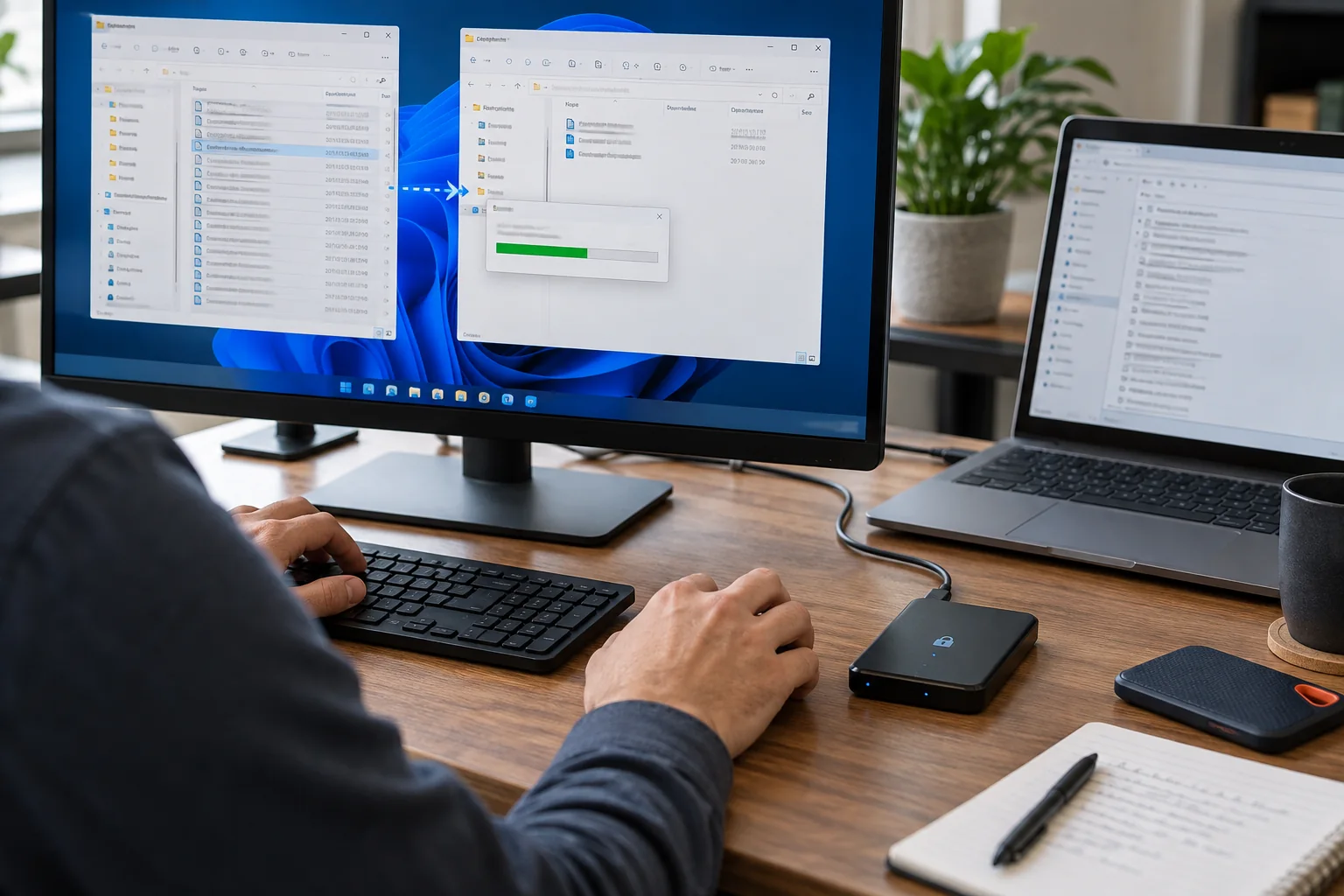
A protected archive cannot undo a data leak from an unprotected staging folder. In the Windows diagnostic evidence workflow, begin by identifying unnecessary copies, direct identifiers and temporary exports. Maintain an untouched original and a separately prepared, minimized support copy. Removing secrets from the support copy must not destroy the diagnostic facts needed to reproduce the bug.
Review direct and indirect identifiers
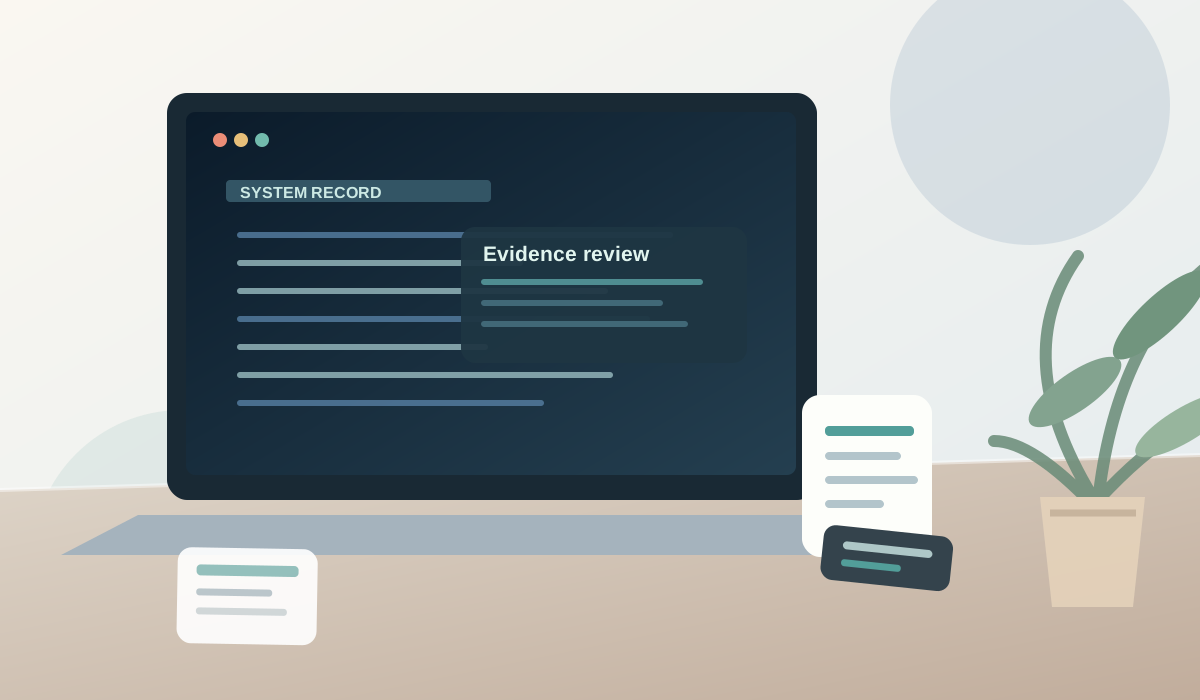
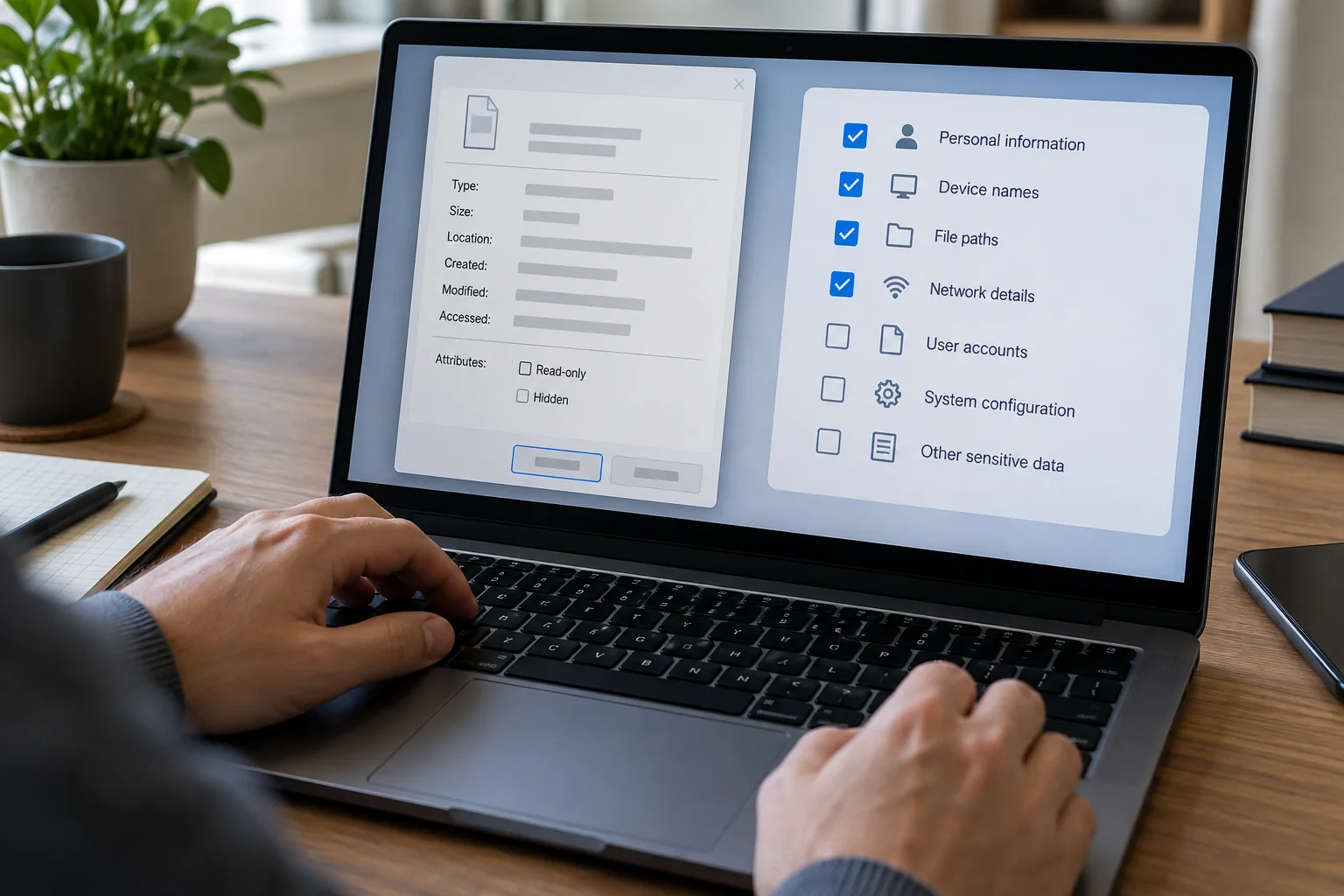
Inspect filenames, document properties, comment histories and surrounding folders for usernames in profile paths, access tokens embedded in application logs and internal IP addresses and device identifiers. An innocuous exported PDF can still contain author names or path metadata, so do not judge privacy from visible text alone.
Prepare a minimum necessary package
For Windows diagnostic evidence, use synthetic references or redacted copies when asking a third party for help. Separate what is essential to execute the task from the information merely convenient to include. Maintain an untouched original and a separately prepared, minimized support copy. Removing secrets from the support copy must not destroy the diagnostic facts needed to reproduce the bug.
Confirm the clean copy
Reopen the reduced file with the application the recipient will use. Inspect extracted text, attachments and retained revisions; verify the approved package against the original inventory without overwriting the source record. For Windows support artifacts, this means checking minidump files, handling trace tokens separately, and using a fake Event Viewer export as the review example. The staging scan should include preview cache locations and exported formats used in that specific workflow.
False sense of safety: storing Event Viewer exports in an encrypted folder while leaving usernames in profile paths unresolved.
Practical implementation checklist
- Identify the accountable approver for Windows diagnostic evidence and write down the exact event being protected.
- Choose a non-sensitive sample drawn from the same format as reproduction screenshots; never use a real identity, key or patient record in a public example.
- Compare the unprotected working copy, restricted recipient copy and intended retained copy. Confirm where extra versions are created.
- Record the approved destination, any failed test, and a date for reassessing the workflow when personnel or software changes.
Questions readers should resolve
Does removing a name from a filename anonymize a file?
Not necessarily. File properties, embedded text, comments and linked keys can still identify a person or organization. For Windows support artifacts, this means checking minidump files, handling trace tokens separately, and using a fake Event Viewer export as the review example. The staging scan should include preview cache locations and exported formats used in that specific workflow.
Who should approve this Windows diagnostic evidence workflow?
Assign a named owner. In this context, start with the assigned support case owner and a designated security reviewer and confirm the applicable organizational authority.
Research and documentation
These sources support the technical boundaries described here. They are not substitutes for testing the current software on the target device, checking legal requirements, or independently confirming product claims.
- Microsoft: Diagnostic Data Viewer
- NewSoftwares Folder Lock: documented features
- Folder Lock FAQ and lost-password limitations
Editorial note: No paid link placement is required for this guide. Product information, if mentioned, describes one possible tool and should not be read as an endorsement or an assertion of universal compatibility.